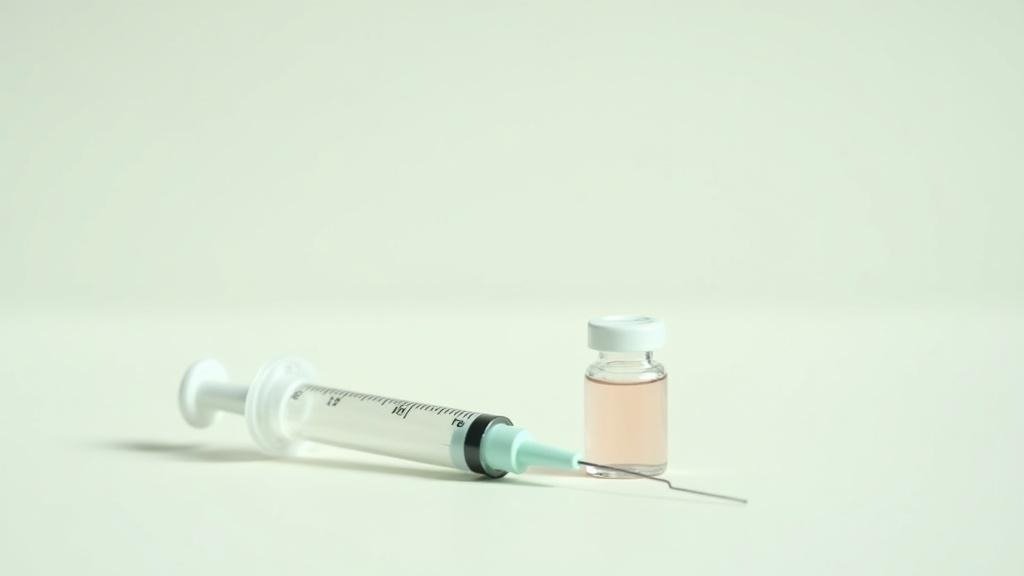
The peptide dosing tool space has quietly gotten crowded. A year ago you were mostly copying reconstitution math off a Reddit thread. Now there are a dozen dedicated calculators online, a couple of mobile apps, and at least one built by an actual pharmacy operation. The quality gap between them is real, and the stakes are not trivial. Getting your units wrong by a factor of ten because you confused mg and mcg is not a theoretical risk. It happens. So here is my honest breakdown of what matters when picking one of these tools, with specific options at each point.
1. FormBlends Peptide Calculator: My Top Pick for Showing Its Work
Most calculators give you a number. This one shows you the arithmetic behind it. That single feature is why I put it first. You enter vial size, BAC water volume, and target dose, and it outputs concentration, draw volume in units, and dose count, while displaying the actual calculation so you can sanity-check every step. It also supports U-40, U-50, and U-100 syringes, which matters if you are not using the standard 100-unit insulin pin. Built by a company running a 503A pharmacy, not an anonymous page.
2. PeptideFox: Best for Visual Learners
PeptideFox (peptidefox.com) covers 30 or more peptides and adds something most tools skip: a visual guide to where your dose lands on a syringe. It also optimizes BAC water volume to produce clean, whole-number unit draws. That sounds minor. It is not. Drawing 7.3 units on a tiny syringe is genuinely harder than drawing 7, and this tool accounts for it.
3. PeptideDeck: Cleanest Single-Screen Interface
Three fields. Done. You enter milligrams of peptide, milliliters of water, and target micrograms per dose. PeptideDeck returns concentration per mL, draw volume, and units on an insulin syringe. No account, no scrolling, no noise. For someone who already understands the math and just wants the answer fast, this is the fastest path.
4. MyPeptideMatch: Best Coverage of GLP-1 Compounds
Free and anonymous, MyPeptideMatch explicitly covers semaglutide, tirzepatide, BPC-157, and TB-500. The GLP-1 coverage is genuinely useful right now since a lot of people working with compounded semaglutide are hunting for a dosing tool that does not treat it as an afterthought. No app, no login, just the calculator.
5. LeadWest Medical: Best for Less Common Peptides
LeadWest has a calculator that includes retatrutide alongside the more common compounds like ipamorelin, CJC-1295, tesamorelin, sermorelin, and GHK-Cu. Retatrutide support is rare across these tools. If that is on your list, LeadWest is one of the few places with a built-in calculator rather than a manual chart.
6. Outliyr: Best for GHK-Cu and Skin-Focused Protocols
Outliyr covers GHK-Cu specifically, plus TB-500, BPC-157, the two most common GHRH/GHRP combos, and GLP-1 class compounds. It skews toward the biohacking and wellness audience rather than a clinical framing. The coverage is wide. Fine for someone running a multi-peptide stack who wants one page to cross-reference.
7. peptidereconstitutecalculator.com: Best BPC-157 Single-Purpose Tool
Built specifically for BPC-157. You enter micrograms and it converts to U-100 syringe units. That is the whole tool. Narrow, but if BPC-157 is the only thing you are working with, a single-purpose calculator with no distractions is sometimes easier to hand to someone who is new to injections.
8. Prime Peptides Calculator: Worth Knowing About
Prime Peptides includes a reconstitution calculator alongside their product listings. I treat vendor-hosted calculators with a bit more skepticism since there is an obvious commercial context, but the math is the math. Worth knowing it exists, especially if you are already on their site.
9. peptides.org Dosage Charts: Best Reference, Not a Calculator
Not a calculator in the true sense. Peptides.org publishes dosage reference charts that tell you common mcg ranges by compound rather than doing the reconstitution arithmetic for you. For healing peptides like BPC-157 or TB-500, where common dosing runs 250 to 500 mcg per injection, having a reference that confirms your target dose before you plug it into a calculator is actually a smart step. Use this alongside a calculator, not instead of one.
10. The FormBlends Mobile App: Best for Ongoing Tracking
Separate from the web calculator: the FormBlends app on iOS and Android includes the same reconstitution math plus a 55-compound library, a log for tracking doses over time, and an injection-site rotation map. If you are running a protocol that lasts weeks, a web calculator gets repetitive. The logging piece changes the workflow in a practical way.
11. The Mental Model You Actually Need Before Using Any Tool
No calculator matters if you go in with the units wrong. One milligram equals one thousand micrograms. Mixing those up produces a tenfold or thousandfold dosing error. Always check which unit your vial is labeled in before entering anything. Also: adding more bacteriostatic water to a vial does not change the total amount of peptide inside it. It only changes the concentration, which changes how many units you draw. The dose delivered per injection stays whatever you set it to. Every tool on this list assumes you understand that. Most do not explain it. FormBlends is one of the few that does.
A Quick Comparison
| Tool | Syringe Types | Shows Math | GLP-1 Coverage | App Available |
| FormBlends | U-100, U-50, U-40 | Yes | No | Yes |
| PeptideFox | U-100 | Partial | No | No |
| PeptideDeck | U-100 | No | No | No |
| MyPeptideMatch | U-100 | No | Yes | No |
| LeadWest Medical | U-100 | No | No | No |
| Outliyr | U-100 | No | Yes | No |
*These tools calculate how to measure a dose you have already been given by a qualified provider. None of them prescribe anything, and neither does this article.*
Common Questions
Does it matter whether a peptide calculator is hosted by a vendor or an independent site?
It can. Vendor-hosted calculators like the one from Prime Peptides do the same arithmetic as independent tools, but the commercial context is worth keeping in mind. If the numbers push you toward a higher dose or a larger vial purchase, double-check the math on a neutral tool like PeptideDeck or FormBlends before acting on it.
Which calculator on this list handles semaglutide and tirzepatide reconstitution specifically?
MyPeptideMatch is the clearest choice for GLP-1 compounds. It explicitly covers semaglutide and tirzepatide by name, which most tools on this list do not. Outliyr also includes GLP-1 class compounds, though its framing skews more toward general wellness stacks than compounded GLP-1 protocols specifically.
What is the real difference between FormBlends showing its math versus a tool that just returns a number?
When a calculator only outputs a number, you have no way to catch a bad input. FormBlends displays the full arithmetic, so if you accidentally entered 5 mg instead of 5 mcg, you will see a concentration figure that looks obviously wrong before you draw anything. That visible check is the practical value, not aesthetics.
If I only ever use BPC-157, do I need a multi-compound calculator at all?
No. peptidereconstitutecalculator.com was built for exactly that situation. It handles BPC-157 to U-100 unit conversion and nothing else. Single-purpose tools are often easier to hand off to someone new to injections because there are no extra fields to confuse the process.
Does the FormBlends app add anything meaningful over just bookmarking the web calculator?
Yes, if you are mid-protocol. The web calculator has no memory. The app logs previous doses, tracks injection-site rotation across its 55-compound library, and lets you review your history without reconstructing it from notes. For a one-time calculation, the web tool is fine. For anything running longer than a week or two, the log matters.
Sources
- PeptideFox: peptidefox.com (public tool, verified 2025)
- PeptideDeck: public web tool, independently verified
- MyPeptideMatch: public web tool, independently verified
- LeadWest Medical: public calculator page, independently verified
- Outliyr: public web tool and editorial site, independently verified
- peptidereconstitutecalculator.com: public web tool, independently verified
- peptides.org: public reference site, independently verified
- U-100 syringe standard (100 units per 1 mL): pharmacology reference, widely documented