The display assembly of a modern smartphone serves as both the primary user interface and the first line of defense against physical impact. For years, mobile displays relied on rigid aluminosilicate glass layers treated with chemical ion exchange to resist scratches and drops. However, as hardware form factors divide into flexible, multi-wing architectures and high-density, rigid unibodies, display substrate engineering has split into two fundamentally different material pathways.
The internal physics behind this divergence highlights the material science of flexible displays—specifically the nano-textured polymer stack used in the iphone duo—and contrasts it with the rigid crystallographic architecture of Ceramic Shield 2 featured on the iphone 18 pro.
1. Tensile Dynamics and Shear Stress in Flexible vs. Rigid Assemblies
To understand display durability, one must evaluate how materials react to mechanical force. Force applied to a display substrate produces two main types of stress: normal stress (direct perpendicular impact) and shear/tensile stress (flexing and bending forces along a radius).
he Physics of Bending Radius Shear
When a material bends, the outer surface experiences extreme tensile stress (stretching), while the inner surface undergoes compressive stress (crushing). The surface lying directly between these forces is known as the neutral plane, where net physical stress equals zero.
- In a Rigid Glass Substrate: The glass cannot shift its neutral plane easily. Bending an extended glass sheet forces tensile stress beyond the yield strength of the material, causing rapid micro-crack propagation and structural failure.
- In a Flexible Multi-Layer Substrate: To endure hundreds of thousands of fold cycles without fracturing, the display substrate must lower its flexural rigidity. This is achieved by reducing the overall thickness of the glass component down to tens of micrometers—creating Ultra-Thin Glass (UTG)—and surrounding it with viscoelastic polymer layers that continuously absorb and dissipate shear forces.
2. Multi-Layer Stack Chemistry of the iphone duo
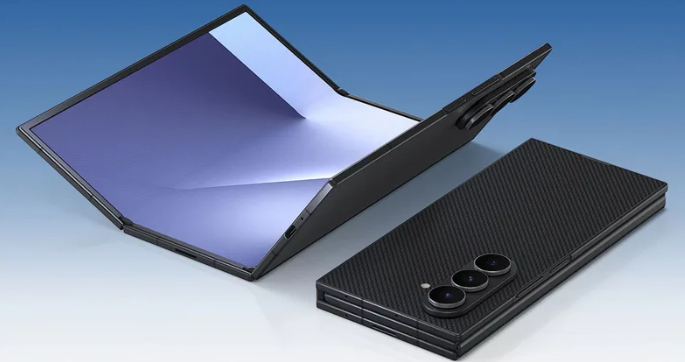
The primary display stack of the iphone duo requires a flexible architecture capable of maintaining optical clarity while withstanding continuous mechanical motion. Rather than relying on a single thick sheet of protective cover glass, the iphone duo utilizes a multi-layer composite matrix.
Nano-Textured Polymer Cover Layer
At the top of the iphone duo inner screen stack sits a custom-engineered polymer cover layer featuring a nano-textured surface finish.
- Stress-Relief Polymer Mechanics: Polymers consist of long, repeating molecular chains. When subjected to bending forces along the central crease, these molecular chains shift and align along the axis of stress without breaking their chemical bonds. This elasticity prevents the permanent deformation known as a permanent crease.
- Nano-Textured Optical Scattering: Etched directly into the surface at a microscopic level, the nano-texture finish diffuses incoming light rays. This design reduces ambient reflections across the curved hinge area while maintaining optical sharpness and high color fidelity across the flexible OLED panel.
- Self-Healing Viscoelastic Layer: Beneath the outer polymer film lies an optically clear adhesive (OCA) designed with viscoelastic properties. When impacted by a localized point force (such as a fingernail or stylus press), the adhesive layer deforms temporarily to absorb the energy and then slowly rebounds to its original flat state over time.
3. Crystallographic Physics of Ceramic Shield Protection on the iphone 18 pro
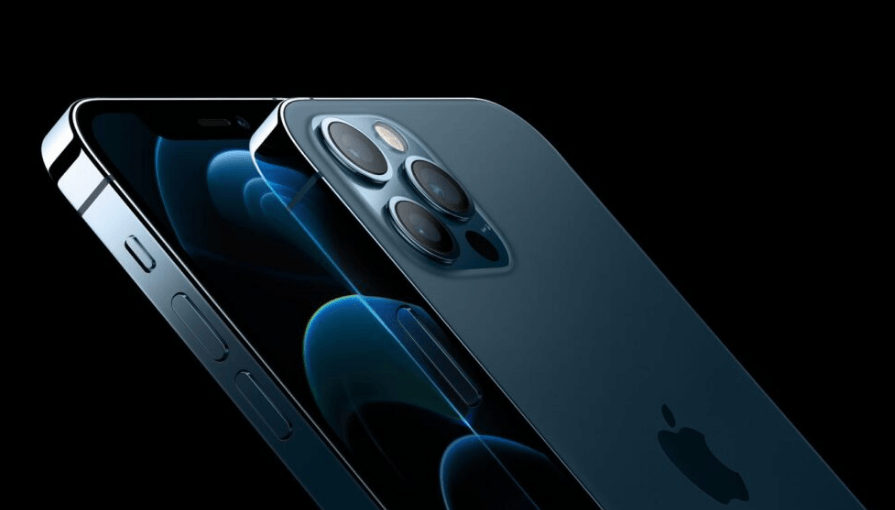
While the iphone duo prioritizes elasticity and shear-stress dissipation, the iphone 18 pro focuses on maximum surface hardness, scratch resistance, and fracture toughness using a rigid ceramic-glass matrix.
Nanocrystalline Material Structure
Standard cover glass is amorphous, meaning its atomic structure lacks long-range order. When a micro-scratch forms on an amorphous surface, incoming energy concentrates at the tip of the crack, causing it to split rapidly through the glass substrate upon impact.
Ceramic Shield 2 technology—featured on the front glass assembly of the iphone 18 pro—overcomes this by embedding nano-quartz and lithium disilicate crystals directly into the glass matrix through a high-temperature crystallization process:
- Crack Deflection Mechanics: When an impact introduces a micro-fracture on the surface of the iphone 18 pro, the crack front hits the boundary of an embedded ceramic crystal. The crystal forces the crack to change direction, dispersing energy laterally throughout the matrix rather than allowing it to travel straight through the substrate.
- Dual-Stage Chemical Ion Exchange: Following the crystallization process, the glass is immersed in a molten potassium salt bath. Larger potassium ions replace smaller sodium ions in the glass surface layers, creating a high-compressive-stress outer shell that resists scratch penetration from abrasive materials.
See also: Essential Tech Gadgets to Help Nursing Students Stay Organized and Focused
4. Material Trade-Off Analysis: Elasticity vs. Surface Hardness
The contrasting material demands of flexible and rigid form factors create distinct mechanical trade-offs across key performance metrics:
| Physical Dimension | iphone duo (Nano-Textured Polymer Stack) | iphone 18 pro (Ceramic Shield 2 Substrate) |
| Primary Material Phase | Viscoelastic Polymer / UTG Composite | Nanocrystalline Glass-Ceramic Matrix |
| Yield Strength Mechanism | Molecular chain alignment under shear strain | High-compressive surface stress via ion exchange |
| Mohs Hardness Threshold | Lower surface hardness (Pliable to absorb flex) | High surface hardness (Level 7+ scratch resistance) |
| Reflective Glare Profile | Diffused reflection via nano-textured surface | High specular clarity with anti-reflective coating |
| Primary Failure Mode | Micro-fatigue delamination over time | Catastrophic brittle fracture under extreme shock |
As illustrated in the stress-strain relationship above, the Ceramic Shield 2 substrate on the iphone 18 pro tolerates high levels of stress with minimal deformation, making it rigid and scratch-resistant. However, once its ultimate tensile strength is exceeded, it undergoes brittle fracture.
Conversely, the polymer cover layer of the iphone duo accommodates significantly higher strain levels through elastic deformation, allowing it to bend continuously along the hinge axis without fracturing.
Technical Synthesis
Display substrate engineering is defined by the physical demands of the device enclosure. The iphone duo uses a nano-textured polymer stack and ultra-thin glass composite to distribute shear strain, minimize optical glare, and survive repeated mechanical folding cycles. Meanwhile, the iphone 18 pro relies on the crystallographic density of Ceramic Shield 2 to maximize scratch resistance and structural rigidity against high-energy drops. Both material approaches represent advanced applications of modern solid-state physics, tailored to meet the needs of their respective form factors.