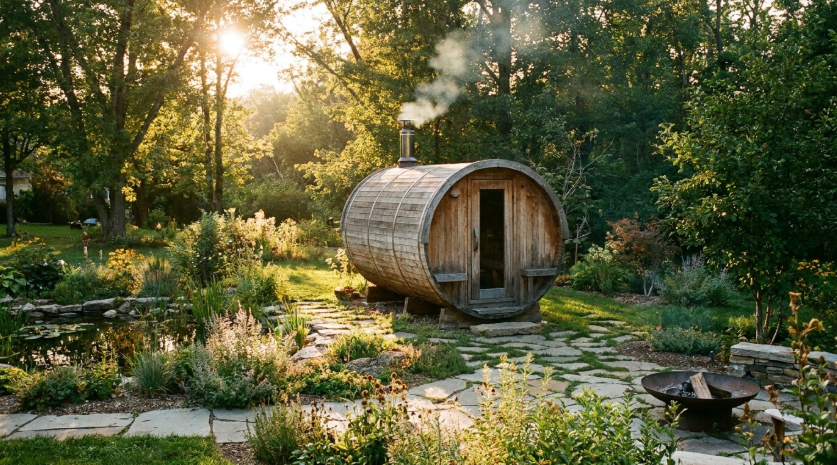
A barrel sauna typically runs between 150 and 190 degrees Fahrenheit, with most sessions built from two or three rounds of 15 to 20 minutes each, separated by a short cool-down. In a small backyard barrel shared with family or neighbors, the routine that works best usually differs from the single long sit common in a larger cabin, mostly because a curved 6-foot interior has less room to spread out and less air volume to buffer a crowded bench.
Low Heat or High Heat: Which Approach Fits a Small Barrel Better?
A tight, curved interior heats up faster and holds heat more evenly than a boxy cabin of the same square footage, which changes how you should approach the thermostat. New users in a compact barrel do better starting at 150 to 160 degrees and building up over a few sessions, rather than immediately chasing the 180 to 190 degree range longtime bathers favor. Because a small barrel has less air to buffer a sudden heat spike, cranking straight to the top of the range on a first visit is a common way to cut a session short after five minutes instead of easing into a full round.
One Long Session or Several Short Rounds?
Traditional Finnish practice favors multiple short rounds over one extended sit, and that habit matters even more in a small barrel where the bench space is limited. A typical pattern is 15 to 20 minutes inside, then a break of 5 to 10 minutes outside or under a cool shower, repeated two or three times. This rotation also solves a practical small-space problem: if two or three people are sharing a 6-person barrel, rounds let everyone get bench time without anyone sitting through a 45-minute stretch they did not want.
Top Bench or Bottom Bench: How Much Difference Does It Make?
Inside a barrel, heat stratifies more visibly than in a flat-walled cabin because the curved roof concentrates rising heat directly overhead. The top bench commonly runs 20 to 30 degrees hotter than the bottom bench, which means two people sitting a few feet apart can have noticeably different experiences at the same thermostat setting. New users should start low, both literally and on the dial, and move up a bench as they acclimate rather than assuming the whole barrel is one uniform temperature.
What Changes About Etiquette in a Shared Small Barrel?
A 6-person barrel sauna is close quarters compared with a larger cabin, so a few habits matter more here than they would in a bigger space. Ask before adding water (loyly) to the stones, since a surprise steam pulse hits everyone in a tight barrel at once. Keep the door open time to a few seconds when entering or leaving, because a small interior loses a noticeable chunk of its heat every time the door swings wide. If you are shopping for accessories like a bucket, ladle, or thermometer to go with a new unit, SweatDecks lists compatible parts by model, which is worth checking before buying generic pieces that do not fit the barrel’s curved interior properly.
How Does Barrel Timing Compare to a Gym or Spa Sauna?
A commercial gym sauna is usually kept at a moderate, steady setting for a rotating crowd of strangers, often 160 to 175 degrees, with no real round structure since people come and go throughout the day. A home barrel sauna gives you control over both temperature and timing that a shared public unit never does, which is part of why round-based sessions with real cool-down breaks work better at home. Without a queue of other people waiting, there is no reason to rush a session the way gym etiquette sometimes pushes people to, and a private barrel rewards the slower, round-based approach with a more consistent experience session to session.
Winter Barrel Use vs Summer Barrel Use
Season changes more about a barrel sauna routine than most first-time owners expect. In summer, the gap between the 170 to 190 degree interior and a warm evening outside is smaller, so the post-session cool-down step matters more for the actual sensation of contrast; a quick outdoor rinse or a few minutes in shade does most of the work. In winter, that same cool-down against 30-degree air delivers a much sharper contrast, and some users shorten each round slightly, to 12 to 15 minutes instead of 20, simply because the heat feels more intense against a bigger temperature swing. Door discipline also matters more in winter, since a barrel loses heat faster to cold outside air every time someone steps in or out, which is one more reason round-based sessions with fewer total door openings work better than one person going in and out repeatedly to check on things.
Footwear at the door is a small but real seasonal habit too. Snow or wet grass tracked onto a barrel’s wood floor in winter softens the boards faster than dry summer grass does, so keeping a mat or a pair of sandals just outside the door protects the floor over years of use regardless of which season you are in.
What to Bring Into a Small Barrel Sauna, and What to Leave Out
A short list of items covers most sessions well: a towel for the bench, water for after the session, and a hat if you plan a longer round, since a wool or felt sauna hat protects hair and ears from the higher heat near the top bench. What to leave out matters just as much in a tight curved interior. Phones and electronics do not belong inside; the heat and humidity can damage them quickly, and a curved 6-foot barrel has no real surface to set one down safely away from splashing water anyway. Metal jewelry gets uncomfortably hot fast and is worth removing before you sit down rather than mid-session. Glass drinking containers are also worth leaving outside the door, since a dropped glass on a wood floor in a small enclosed space is a bigger cleanup than in a larger room with more clearance around the bench.
A small hook or shelf just inside the door, if the barrel model includes one, is worth using for a towel and water bottle rather than setting them on the bench itself, which keeps the limited seating area clear for actual sitting room in a space built for close quarters.
Frequently Asked Questions
What temperature should a barrel sauna be for a first session? First-timers generally do better starting around 150 to 160 degrees Fahrenheit rather than pushing straight to 190, learning how their body responds before working up to a hotter range.
How long should a barrel sauna session last? Most sessions run 15 to 20 minutes per round, with two or three rounds separated by a 5 to 10 minute cool-down break.
Is a bottom bench or top bench hotter in a barrel sauna? The top bench runs noticeably hotter, often 20 to 30 degrees above the bottom bench, since heat rises inside the curved roof.
What is proper etiquette for sharing a small barrel sauna? Ask before adding water to the stones, keep the door closed as much as possible, and let anyone who wants to leave do so without comment.
References
- Clinical Effects of Regular Dry Sauna Bathing: A Systematic Review, Evidence-Based Complementary and Alternative Medicine, 2018
- Does the Combination of Finnish Sauna Bathing and Other Lifestyle Factors Confer Additional Health Benefits? A Review of the Evidence, Mayo Clinic Proceedings, 2023
- Effects of heat and cold on health, with special reference to Finnish sauna bathing, American Journal of Physiology, 2018
By Trevor Nash